Dr. Caroline Koudoro-Parfait
PhD in Digital Humanities and Comparative Literature
Research interests
I am a postdoctoral research fellow in Digital Humanities and Natural Language Processing. My research is funded by the Alexander von Humboldt Foundation for the period from October 2025 to September 2027. I collaborate with Professor Damien Tricoire, Chair of Early Modern History at the University of Trier. I currently focus my research on the circulation of women between the French Antilles and metropolitan France during the early modern period, with a particular emphasis on the revolutionary era.
I earned my PhD in Digital Humanities and Comparative Literature on January 6, 2025 (Thesis dissertation available on HAL). My doctoral research, funded by the Sorbonne Center for Artificial Intelligence, was supervised by Glenn Roe and Gaël Lejeune and co-supervised by Motasem Alrahabi. My research involved applying Named Entity Recognition (NER) systems to 19th-century fictional texts from the ELTeC collection, which had been transcribed using Optical Character Recognition (OCR). Given the often noisy or degraded nature of these OCR-transcribed data, I assessed the robustness of NER systems and analyzed the impact of OCR-induced noise on their performance. My findings led to several recommendations for future research in Digital Humanities, particularly regarding strategies to address noisy data before undertaking further—often costly—OCR processing.
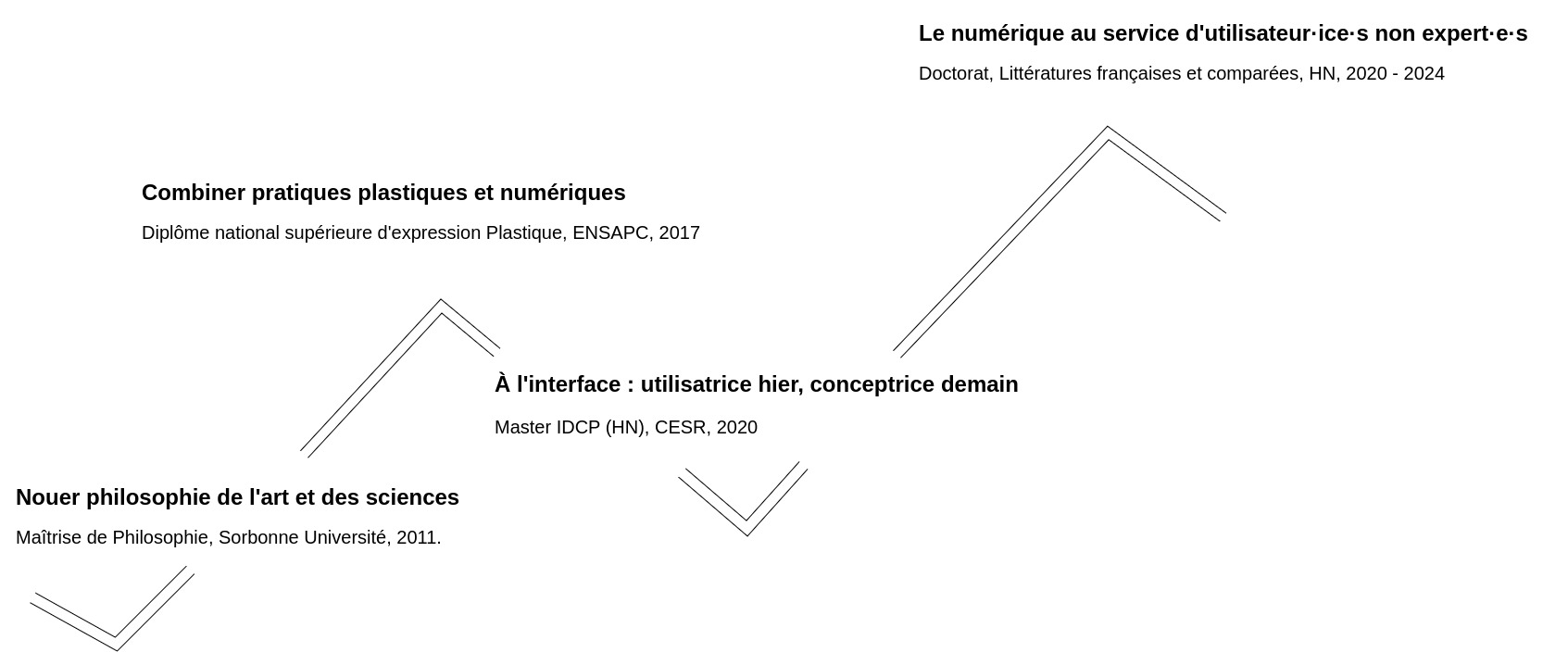
In 2020, I earned a Master’s degree in Digital Humanities from the Centre for Advanced Renaissance Studies at the University of Tours. Previously, I obtained a Diplôme National Supérieur d’Expression Plastique from the École Nationale Supérieure d’Arts de Paris-Cergy in 2017, and a Master’s degree in Philosophy of Art from Sorbonne Université in 2011.
I integrate approaches from Natural Language Processing (NLP) and computational linguistics with questions arising from the humanities and literary studies. My work contributes to renewing and enriching literary and historical research through digital methods, while promoting accessibility for future scholarship.
Bio
Work Experience
Academic path
Publications
International Peer-Reviewed Conferences
-
1. Koudoro-Parfait, C., Hernandez, M., Lejeune, G., Dupont, Y. (2025).
Epimethee – A Workflow from OCR to Spatial Mapping.
In: Yin, XC., Karatzas, D., Lopresti, D. (eds) Document Analysis and Recognition – ICDAR 2025.
ICDAR 2025. Lecture Notes in Computer Science, vol 16025. Springer, Cham.
https://doi.org/10.1007/978-3-032-04624-6_1,
Conférence de Rang A. - 2. Koudoro-Parfait, C., Fief, C. (2025). Évaluer les erreurs d'étiquetage de la reconnaissance d'entités nommées sur des transcriptions OCR de romans français [Evaluating Labeling Errors in Named Entity Recognition on OCR Transcriptions of French Novels]. Proceedings of the Conference Humanistica 2025, Dakar, Sénégal.
- 3. Koudoro-Parfait, C., Alrahabi, M., Dupont, Y., Lejeune, G., Roe, G. (2023). Mapping spatial named entities from noisy OCR output: Epimetheus from OCR to map. Scholger, W., Vogeler, G., Tasovac, T., Baillot, A., Helling, P., Collaboration as Opportunity (DH2023), ADHO Digital Humanities Conference, Graz, Austria, 154-155. https://zenodo.org/records/8108050 (zenodo)
-
4. Koudoro-Parfait, C., Lejeune, G., Buth, R. (2022).
Reconnaissance d’entités nommées sur des sorties OCR bruitées: des pistes pour la désambiguïsation morphologique automatique
[Named Entity Recognition on Noisy OCR Output: Approaches to Automatic Morphological Disambiguation].
Proceedings of the 29th Conference on Natural Language Processing. TAL and Digital Humanities Workshop (TAL-HN), ATALA, Avignon, France, 45-55. https://aclanthology.org/2022.jeptalnrecital-humanum.6/ (aclanthology) - 5. Koudoro-Parfait, C. (2022). Évaluation de la tâche de clustering pour l’alignement de formes contaminées d’entités nommées issues d’un corpus OCR bruité [Assessment of Clustering Methods for Aligning Contaminated Named Entity Variants in Noisy OCR Corpora]. Corro, C., Lejeune, G. Proceedings of the Symposium on the Robustness of NLP Systems, Paris, France, 5-8. https://hal.science/hal-03853541v1/file/main.pdf (hal-03853541f).
- 6. Alrahabi, M., Lejeune, G., Parfait, C., Roe, G. (2021). Discovering Spatial Relations in Literature : What is the influence of OCR noise? Kanner, A., Mäkelä, E., Marjanen, J., Tolonen, M., Oberbichler, S., Duong, Q., Pivovarova, L., Ali, D., Verstockt, S., Ollion, É., Shen, R., Arnold, M., Brown, D., Adam, R., Balasubramanian, S., Charvat, V. M., Füllsack, M., Kleinert, J., Misera, H., … Lomazow, S. (2021). The Book of Abstracts for What's Past is Prologue: The NewsEye International Conference. What's Past is Prologue: The NewsEye International Conference - Towards a future of interdisciplinary collaboration between Cultural Heritage, Digital Humanities, Computer Science and Data S. 20. https://doi.org/10.5281/zenodo.5167375 (Zenodo)
- 7. Arruga, M., Koudoro-Parfait, C. (2020). Development of digital platform about stained glass restoration data in France. MSHValdeLoire, in FAIR Heritage -17 and 18 juin 2020. [Vidéo]. Canal-U. https://doi.org/10.60527/adxq-pe72. (vidéo consultée le 25 novembre 2025)
- 8. Parfait, C., Arruga, M., Tigero, R. (2020). Espace Numérique du Vitrail - ENVi, Développer une plate-forme numérique sur les données de restauration du vitrail en France. Colloque Humanistica 2020.
International Peer-Reviewed Journals
- 1. Koudoro-Parfait, C., Petkovic, L., Roe, G. (2023). Analyse multilingue de l'impact de la correction automatique de la ROC sur la reconnaissance d’entités nommées spatiales dans des corpus littéraires [Multilingual Analysis of the Impact of OCR Correction on Spatial Named Entity Recognition in Literary Corpora]. Corro, C., Lejeune, G., Niculae, V. Revue TAL, Vol. 64 - no2 / 2023, 43-67. https://www.atala.org/index.php/content/tal_64_2_2
National Peer-Reviewed Conferences
- 1. Koudoro-Parfait, C., Lejeune, G., Petkovic, L. (2023). Correction automatique des interférences OCR dans la reconnaissance d’entités nommées spatiales : réel gain ou perte de l’information ? [Automatic Correction of OCR Interference in Spatial Named Entity Recognition: Real Gain or Loss of Information?]. Gugliotta, E., Pallanti, L., Kraif, O., Fabry, I., Barletta, M. Journée d'étude Bruit de fond ou valeur ajoutée ? Gérer le bruit lors des traitements informatiques des corpus linguistiques [Symposium—Background Noise or Added Value? Managing Noise in the Computational Processing of Linguistic Corpora]. Grenoble, France, 2-5. https://hal.science/hal-05176056 (hal-05176056)
- 2. Koudoro-Parfait, C., Lejeune, G. (2022). De la création des corpus numériques à leur utilisation : les interférences dans la reconnaissance d'entités nommées spatiales [From Building Digital Corpora to Using Them: Challenges and Interference in Spatial Named Entity Recognition]. Gherdevich, D., Mermet, É. Séminaire Des sources aux systèmes d’information géographique : des outils pour la cartographie dans les humanités numériques [Seminar: From Sources to Geographic Information Systems — Tools for Mapping in Digital Humanities], Paris (online), France, 1-2. https://hal.science/hal-05176021 (hal-05176021)
National Peer-Reviewed Journals
- 1. Petkovic, L., Koudoro-Parfait, C., Desmarest, M.-S., Lejeune, G. (2025). Quelle solution pour améliorer les performances de la reconnaissance d’entités nommées sur des données bruitées, corriger l’entrée ou filtrer la sortie ? [Improving Named Entity Recognition on Noisy Data: Should We Correct the Input or Filter the Output?]. Gugliotta, E., Pallanti, L., Kraif, O., Barletta, M., Fabry, I. Revue Corpus n°26, 2-19. https://doi.org/10.4000/1364s (DOI)
Peer-Reviewed Book Chapters
- 1. Koudoro-Parfait, C., Lejeune, G. (2023). Reconnaissance des Entités Nommées spatiales sur un corpus littéraire bruité : des entités à la carte [Spatial Named Entity Recognition in a Noisy Literary Corpus: A Customized Entity Mapping Approach]. Gherdevich, D., Mermet, É. Book Chapter, Des sources aux systèmes d’information géographique : des outils pour la cartographie dans les humanités numériques. Publishers, Matériologiques dans la collection Modélisations, simulations, systèmes complexes. (déclaration d'acceptation de l'éditeur)
international workshops with peer review committee
- 1. Boubehziz, T., Koudoro-Parfait, C., Lejeune, G. (2025). Assessing the Impact of Image Resolution on OCR Transcription Accuracy. Vyshnevetska, V. 3rd International Workshop on Digital Language Archives de la conférence ACM/IEEE Joint Conference on Digital Libraries 2025.
- 2. Bezançon, J., Boubehziz, T., Chutaux, C., Zine, O., Acensio, L., Koudoro-Parfait, C., Briglia, A., Lejeune, G. (2023). SPQR@Deft2023: Résolution automatique de QCM médicaux à partir de corpus de domaine et de mesures de similarité [SPQR@Deft2023: Automatic Solving of Medical Multiple-Choice Questions Using Domain Corpora and Similarity Measures]. Bazoge, A., Daille, B., Dufour, R., Labrak, Y., Morin, E., Rouvier, M. TALN2023 Conference Proceedings, Workshop Défi Fouille de Textes@TALN2023, Text Mining Challenge@TALN2023, ATALA, Paris, France, 11-22. https://coria-taln-2023.sciencesconf.org/data/proceedings_DEFT.pdf (hal-04131847)
- 3. Ben Ltaifa, I., Boubehziz, T., Briglia, A., Chutaux, C., Dupont, Y., González-Gallardo, C., Koudoro-Parfait, C., Lejeune, G. (2022). Stylo@ DEFT2022: Notation automatique de copies d’étudiant· e· s par combinaisons de méthodes de similarité [Stylo@ DEFT2022: Automated Assessment of Student Responses via Hybrid Similarity Approaches]. Proceedings of the 29th Conference on Natural Language Processing. Atelier DÉfi Fouille de Textes (DEFT) [Text Mining Challenge], ATALA, 11-22. https://hal.sorbonne-universite.fr/TALN-RECITAL2022/hal-03705873v1 (hal-03705873)
- 4. Koudoro-Parfait, C. (2022). Spatial Named Entities Recognition in Literary Texts: the Crossroads of Digital Humanities and Natural Language Processing. Baillot, A., Magué, J.-P. Natural Language Processing meets Digital Humanities, Lyon (online), France, 1-2.
- 5. Koudoro-Parfait, C., Lejeune, G., Roe, G. (2021). Spatial Named Entity Recognition in Literary Texts: What is the Influence of OCR Noise? Moncla, L., Brando, C., McDonough, K. GeoHumanities@SIGSPATIAL 2021: Proceedings of the 5th ACM, SIGSPATIAL International Workshop on Geospatial Humanities, Beijing (online), China, 2 - 5 Novembre, 13-21. https://dl.acm.org/doi/10.1145/3486187.3490206
- 6. Koudoro-Parfait, C., Lejeune, G., Alrahabi, M., Roe, G. (2021). Reconnaissance d'entités nommées spatiales dans des transcriptions OCR bruitées de textes littéraires [Spatial Named Entity Recognition in Noisy OCR Transcriptions of Literary Texts]. Brando C., Moncla L. SAGEO 2021, Atelier Humanités Numériques Spatialisées [Workshop on Spatialized Digital Humanities, ], Paris (online), France, 1-2. https://hal.science/hal-05175990 (hal-05175990)
- 7. Koudoro-Parfait, C., Lejeune, G., Tanguy, J.-B. (2021). Réutiliser les corpus numériques constitués par OCR~: bruit et silence dans les data papers [Reusing OCR-Generated Corpora: Noise and Silence in Data Papers]. Bardiot, C., De Maeyer, J. DHNord2021 : Publier, partager, réutiliser les données de la recherche : les data papers et leurs enjeux [DHNord2021: Publishing, Sharing, and Reusing Research Data: Data Papers and Their Challenges]. https://hal.science/hal-04029006 (hal-04029006)
Invitations to conferences and seminars
- 1. Parfait, C. (2025). Explorer la collection Française d'ELTeC avec l'outil de cartographie textuelle Epiméthée. Dumenieu, B., Abadie, N., Brando, C., Moncla, L. Ateliers MAGIS, Humanités numériques spatialisées, SAGEO 2025. https://sageo2025.sciencesconf.org/resource/page/id/3
- 2. Bouchard, A., Koudoro-Parfait, C., Solnon, C. (2024). Table ronde : L’impact de l’IA sur les pratiques documentaires : regards croisés entre chercheurs et bibliothécaires. Bouju, P. ENSSIB.
- 3. Parfait, C., Nascimento, L. (2024). Table ronde : s’approprier sa recherche. La posture des doctorantes et doctorants ..., axe : « ... face aux Intelligences artificielles (IA) ». Courtois, M. et Collectif doctoral. Sorbonne Actuelle 2024. https://lettres.sorbonne-universite.fr/sites/default/files/media/2024-05/Programme%20-%20S%27approprier%20sa%20recherche.pdf
- 4. Koudoro-Parfait, C. (2023). Garder trace de son travail et le partager en traitement automatique des langues. Massot M.-L., Tricoche, A., Schultz, E. Atelier Digit_Hum 2023, Manipuler des données en SHS : R, Python et les carnets interactifs. École normale supérieure. https://explore.psl.eu/fr/le-magazine/videos/garder-trace-de-son-travail-et-le-partager-en-traitement-automatique-des-langues
- 5. Lejeune, G., Koudoro-Parfait, C. (2023). OCR impact on Named Entity Recognition on historical documents : Problem Presentation ... and Epistemological consequences. Summer School on Digital Humanities, UNAM/SCAI, Université nationale autonome du Mexique.
- 6. Parfait, C. (2022). Reconnaissance d’entités nommées spatiales dans des textes bruités : vers une cartographie littéraire. Alrahabi, M., Roe, G. Journée d’étude organisée par ObTIC : Analyse spatiale des textes littéraires. https://obtic.sorbonne-universite.fr/actualite/je-analyse-spatiale-des-textes-litteraires/
- 7. Koudoro-Parfait, C. (2022). Des formats de données pour mes sources : un casse-tête ?!. Grison, T., Bordier, C. Séminaire doctoral CERES.
- 8. Koudoro-Parfait, C. (2021). Reconnaissance des Entités Nommées (REN) spatiales dans un corpus littéraire : robustesse des systèmes existants ?. Roe, G. Séminaire Humanités Numériques Littéraires, ObTIC.
Participation in seminars held by affiliated laboratories
- 1. Koudoro-Parfait, C. (2025). Exploration de la collection Française d’ELTeC avec l’outil de cartographie textuelle Épiméthée. Couffignal, G., Lejeune, G. Séminaire de l’équipe Variation Linguistique et Linguistique Computationnelle. Laboratoire Sens Texte Informatique Histoire.
- 2. Koudoro-Parfait, C. (2024). Annoter un corpus bruité quelles difficultés et perspectives. Couffignal, G., Lejeune, G. Séminaire de l'équipe Variation Linguistique et Linguistique Computationnelle. Laboratoire Sens Texte Informatique Histoire.
- 3. Koudoro-Parfait, C., Lejeune, G. (2023). Regrouper des Entités Nommées de Lieux issues d'océrisation : Épiméthée de l'OCR à la carte [Mapping spatial named entities from noisy OCR output: Epimethee from OCR to map]. Couffignal, G., Lejeune, G. Séminaire de l'équipe Variation Linguistique et Linguistique Computationnelle. Laboratoire Sens Texte Informatique Histoire.
- 4. Koudoro-Parfait, C. (2023). Groupe de Travail OCR. Couffignal, G., Lejeune, G. Séminaire de l'équipe Variation Linguistique et Linguistique Computationnelle. Laboratoire Sens Texte Informatique Histoire.
- 5. Koudoro-Parfait, C., Petkovic, L. (2023). Correction automatique des interférences OCR dans la reconnaissance d’entités nommées spatiales : réel gain ou perte de l’information ?. Couffignal, G., Lejeune, G. Séminaire de l'équipe Variation Linguistique et Linguistique Computationnelle. Laboratoire Sens Texte Informatique Histoire.
- 6. Koudoro-Parfait, C. (2023). Cybernetics and Society - The Human Use of Human Beings. N. Wiener, 1950. Club de lecture ML4DH, CERES, SCAI, ObTIC.
- 7. Koudoro-Parfait, C. (2022). Évaluation des résultats de NER sur des transcriptions OCR bruitées par élaboration de supports cartographiques. Millour, A., Lejeune, G. Séminaire de l'équipe de Linguistique Computationnelle. Laboratoire Sens Texte Informatique Histoire.
- 8. Koudoro-Parfait, C. (2021). Reconnaissance d'entités nommées dans des textes de littérature française du 19ème : le poids du bruit ?. Millour, A., Lejeune, G. Séminaire de l'équipe de Linguistique Computationnelle. Laboratoire Sens Texte Informatique Histoire.
Organization of scientific events
Organisation of the NER for historical documents seminar
https://ner-for-historical-docs.github.io/
- 1. Clavaud, F., Graiff, C. (30 mai 2024). NER4Archives : reconnaître, réconcilier et identifier les entités nommées dans les instruments de recherche archivistiques au format EAD. Koudoro-Parfait, C., Chazalon, J., Lejeune, G., Dumenieu, B., Abadie, N., Kermorvant, C. NER for historical documents.
- 2. Tarride, S. (28 mars 2024). Extraction d’informations structurées dans des documents historiques. Kermorvant, C., Koudoro-Parfait, C., Chazalon, J., Lejeune, G., Dumenieu, B., Abadie, N. NER for historical documents.
- 3. Paquet, T., Coquenet, D., Constum, T. (16 novembre 2023). Approches pour la reconnaissance d’écriture et la reconnaissance d’entités nommées. Chazalon, J., Koudoro-Parfait, C., Lejeune, G., Dumenieu, B., Abadie, N., Kermorvant, C. NER for historical documents.
- 4. Poibeau, T. (19 octobre 2023). Analyser les entités dans les romans pour détecter des tendances historiques (grâce au projet BookNLP). Chazalon, J., Koudoro-Parfait, C., Lejeune, G., Dumenieu, B., Abadie, N., Kermorvant, C. NER for historical documents.
- 5. Brando Lebas, C., Mélanie-Becquet, F. (17 mars 2023). Annuaires de propriétaires et des propriétés de Paris (1898, 1903, 1913, 1923) : du papier à la carte. Koudoro-Parfait, C., Chazalon, J., Lejeune, G., Dumenieu, B., Abadie, N., Kermorvant, C. NER for historical documents.
- 6. Doucet, A., Boros, E. (16 septembre 2022). Impact de la reconnaissance optique des caractères sur la reconnaissance des entités nommées. Lejeune, G., Koudoro-Parfait, C., Chazalon, J., Dumenieu, B., Abadie, N., Kermorvant, C. NER for historical documents.
- 7. Abadie, N., Dumenieu, B., Chazalon, J., Kermorvant, C., Koudoro-Parfait, C., Lejeune, G. (7 juillet 2022). Session d’introduction. NER for historical documents.
Workshop organisation
- 1. Koudoro-Parfait, C., Hernandez, M. (2024). De l’OCR à la visualisation de données. Atelier ObTIC, BnF.
- 2. Koudoro-Parfait, C., Petkovic, L. ( 26-30 juin 2023). Utilisation des techniques de transcription automatique des textes pour l’analyse de documents maritimes dactylographiés du XXe siècle. École d’été d’Analyse Numérique de l’HIstoire de la Mer et des Océans (ANHIMO 2023). Institut de l’Océan de l’Alliance Sorbonne Université et Sorbonne Center for Artificial Intelligence (SCAI), Paris (France).
- 3. Koudoro-Parfait, C., Tangy, J.-B. (2021). Workshop ROC & NER. Maison de la recherche, Sorbonne Université, Paris.
University-based professional development programs
- 10. ETAL 2025 : École d'été en Traitement Automatique des Langues (1-5 sept. 2025). Lejeune, G., Piwowarski, B., Soulier, L. Roscoff (France).
- 9. Outils et méthodes pour la thèse, Humanités numériques : principes, outils et exemples (7 mars 2024). Bibliothèque Universitaire de Jussieu, Sorbonne Université.
- 8. Éthique et intégrité scientifique - Ateliers de sensibilisation aux exigences de l’intégrité scientifique (5-12 nov. 2024). Collège doctoral, Sorbonne Université.
- 7. Préparer le devenir professionnel des doctorants dans le secteur public comme dans le secteur privé. Service Historique de la Défense à Vincennes (15 mai 2023). Inquimbert, A.-A.
- 6. Atelier : Extraction et analyse des réseaux de personnages dans les romans (13 juin 2023). Labatut, V., Amalvy, A., atelier de l'ObTIC et BnF DataLab.
- 5. Sciences participatives, sciences citoyennes (19 oct. 2021). Collège doctoral, Sorbonne Université.
- 4. Comment passer d’une présentation vers les pairs à une présentation grand public ? (14 sept. 2021). Sorbonne Université.
- 3. Modules de formation à la création d’entreprise. Concours Créa Campus : Étude de marché Positionnement, marketing. (2018). Université de Tours.
- 2. Atelier de recherche Objets Poétiques (2016). Broqua, V. Master de Création Littéraire, Université Paris 8.
- 1. Atelier -- Rencontre avec des acteurs de l’édition et de l’écriture (2016). Message, V. Master de Création Littéraire, Université Paris 8.
Teaching experiences (601.5 heTDs)
Adjunct Lecturer, Dpt. Digitale Literatur -- und Kulturwissenschaften, Master Digital Humanities -- Universität Trier,
april 2026 - july 2026 = 42 heTDs
| Matière | Années | Niveau | CM | TD | Supports |
|---|---|---|---|---|---|
| Programmation Python | 26 | M1 | 21 | 21 | En cours d'élaboration |
Adjunct Lecturer, DSAA 1 in Digital Design (Master’s degree) -- ENSAAMA, March 2026 = 8 heTDs
| Matière | Années | Niveau | CM | TD | Supports |
|---|---|---|---|---|---|
| Les systèmes IA pour la création littéraire : Programmation Python | 25/26 | M1 | -- | 8 | En cours d'élaboration |
Temporary Teaching and Research Fellow (ATER), Linguistics and Computer Science -- Sorbonne Université,
2023 - 2025 = 380 heTDs
| Matière | Années | Niveau | CM | TD | Supports |
|---|---|---|---|---|---|
| Total = 380 heTDs | 23/25 | 141 | 239 | ||
| Programmation Python S5, S6 | 23/25 | L3 | 126 | 84 | |
| Humanités Numériques (HN) | 23/24 | M2 | 3 | -- | Supports personnels Master 1 HN |
| Analyse Lexicale en TAL | 23/25 | M1 | 1,5 | 4,5 | Supports hérités |
| Linguistique Informatique | 23/25 | L2 | -- | 6,5 | Supports hérités |
| PIX - Programmer et résoudre des problèmes informatiques | 23/25 | L2 | 10,5 | 144 | Supports hérités |
Adjunct Lecturer, Python Programming -- INALCO, 2021 - 2023 = 171.5 heTDs
| Matière | Années | Niveau | CM | TD | Supports |
|---|---|---|---|---|---|
| Total = 171.5 heTDs | 21/23 | 73.5 | 98 | ||
| Algorithmique et structuration des données ; Programmation Python | 22/23 | L3 | 36 | 48 | Supports personnels INALCO L3 |
| Algorithmique et structuration des données ; Programmation Python | 21/22 | L3 | 37.5 | 50 | idem |
Portfolio
Combined database query system/ HTR / Archives
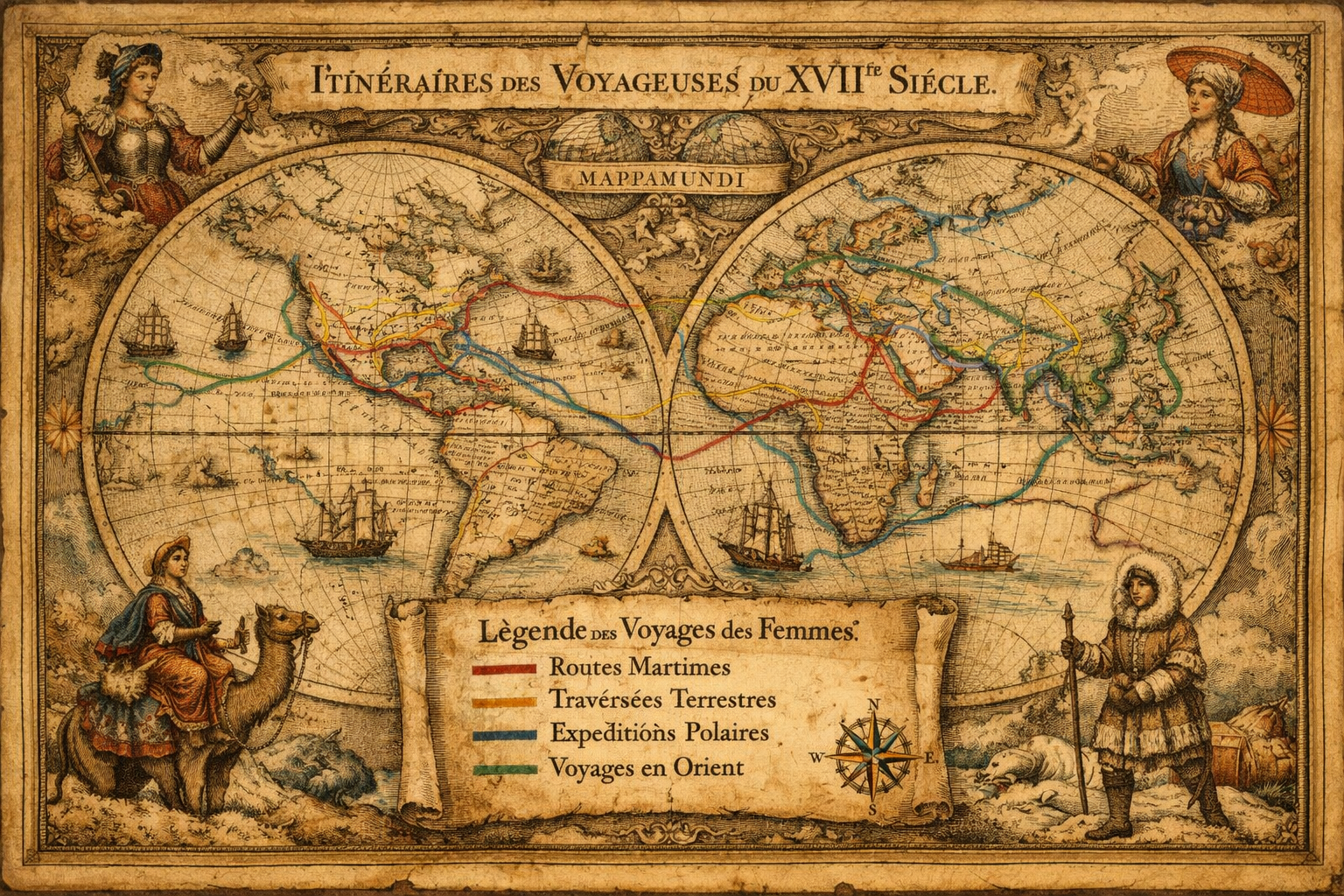
FIAmma (Mobilités Féminines Métropole Antilles & IA)
This project aims to design protocols for cross-querying existing databases, favoring a combinatorial approach over an aggregative one. The challenge is to develop a system that enables comparative and systematic analysis while preserving the specificity and epistemological status of the diverse data types mobilized by the queries.
Named-entity recognition / OCR / GIS
Épiméthée github repository
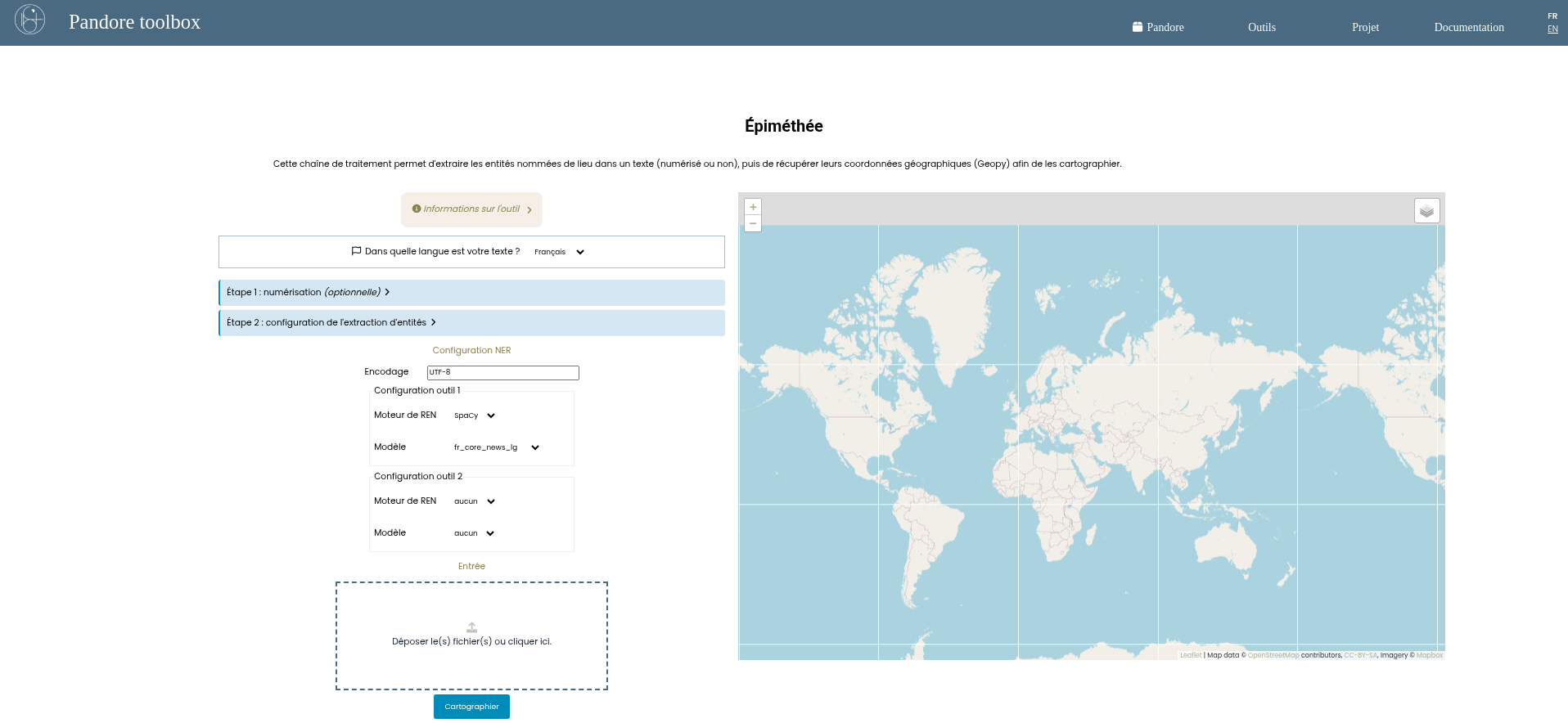
This workflow extracts place names from text (digitised or not) and then retrieves their geographic coordinates (Geopy) in order to map them.
Arts Plastiques / ENSAPC / DNSEP / DNAP
visual practices / Pratiques Plastiques
DNSEP 2017, DNAP 2014.